Copyright © 2023 Audio Music. Todos los derechos reservados. Creado por Clickfive Agencia Digital.

Turn Your Still Images Into Stunning Videos With an Online App
Transform a single still image into a dynamic, lifelike video in seconds with an online image to video app. These powerful tools use advanced AI to generate smooth motion, making it effortless to bring your photographs or artwork to life without complex software. Create engaging visual content for social media, marketing, or personal projects instantly from any device.
Why Static Pictures Now Move: The Rise of AI-Driven Animation Tools
The recent proliferation of AI-driven animation tools marks a convergence of advancements in machine learning and computer vision, fundamentally altering how static images are given motion. These systems, leveraging generative adversarial networks and diffusion models, automate the labor-intensive processes of rigging and tweening that once required significant human effort. By analyzing single frames to infer depth, texture, and spatial relationships, algorithms can now generate plausible motion vectors, creating lifelike loops or complex sequences from a single photograph. This capability democratizes animation, making it accessible to non-specialists while drastically reducing production time for professionals. The underlying technology powers features like motion brushes and auto-lip-sync, making AI video generation a practical tool for marketing, education, and social media content. Consequently, the once-clear line between static imagery and video is dissolving, driven by a demand for dynamic, engaging visual communication that can be produced at scale with minimal manual input, solidifying automated animation as a mainstream creative process.
From Still Frames to Seamless Motion: How Modern Algorithms Work
Static images are now animated through the rise of AI-driven tools that automate the complex, labor-intensive processes of traditional animation. These systems use neural networks to interpret a single image, predicting motion, depth, and object behavior to generate smooth, looping sequences or detailed transformations. AI animation tools democratize motion design, enabling creators without technical skills to produce high-quality content. Key capabilities include:
- Automatic rigging: Software like Adobe’s After Effects AI analyzes a character’s structure to add moving joints.
- Depth-based parallax: Generates 3D-like camera shifts from a 2D photo.
- Style transfer: Applies motion to any visual aesthetic, from oil paintings to vector art.
This shift reduces production costs from weeks to hours, while platforms like Runway and Pika Labs allow iterative experimentation. The result is a new visual language where any still frame, from stock photography to personal artwork, can become an engaging, dynamic asset for marketing, education, or entertainment. This efficiency is reshaping creative workflows across industries.
Key Differences Between Traditional Video Editors and Automated Clip Generators
Static images are no longer static because AI-driven animation tools have democratized motion, turning a previously labor-intensive craft into an accessible, automated process. The rise of generative AI in motion design enables creators to breathe life into stills with minimal effort, leveraging neural networks that analyze depth, texture, and subject focus to produce fluid, believable movement. These tools eliminate the tedious frames-per-second workflow by allowing users to select a static image, define a motion path or style, and watch the AI interpolate the missing frames. Key advances include:
- Depth-aware warping that respects 3D spatial logic within flat pictures.
- Style-consistent frame generation that maintains artistic integrity across movements.
- Real-time preview powered by GPU acceleration, making feedback instantaneous.
As an expert, I advise prioritizing tools that offer granular control over motion vectors to avoid unnatural artifacts. For marketers and content creators, this shift means static assets now double as micro-video assets, drastically reducing production time while increasing engagement metrics.
Top Features to Seek in a Photo-to-Motion Converter
When selecting a photo-to-motion converter, prioritize features that ensure both quality and usability. Look for high-resolution output support to avoid pixelation in animations, alongside customizable motion parameters like frame rate and transition smoothness. A user-friendly interface with drag-and-drop functionality is essential for efficient workflow. Advanced AI-powered algorithms are crucial for generating realistic motion from static images, particularly in background depth and object articulation. Pay attention to batch processing capabilities for handling multiple images simultaneously. Export flexibility—including GIF, MP4, and APNG formats—is vital for varied use cases. Cloud integration and template libraries can significantly enhance productivity.
Prioritize converters that offer «baked-in» motion paths without requiring manual keyframes; this automation saves hours of tedious work.
Finally, confirm the tool supports your specific image file types (JPEG, PNG, etc.) and has a reasonable file size limit for uploads.

Ultra-Realistic Movement Without Artificial Glitches
When selecting a photo-to-motion converter, prioritize high-resolution output to avoid pixelation and artifacts in the final animation. Look for customizable motion parameters, such as pan, zoom, and rotation, which allow detailed control over the camera path. A robust software will also offer keyframe editing for precise timing and seamless transitions. Additionally, batch processing capabilities can significantly streamline workflow when converting multiple images simultaneously.
Audio Integration: Syncing Soundtracks with Visual Transitions
When choosing a top-tier photo-to-motion converter, priority should go to robust AI motion algorithms that deliver fluid, natural-looking liftoffs without jarring artifacts. A dynamic tool offers deep control over camera movement: seamless zooming, panning, and parallax depth mapping for cinematic quality. Look for features like multi-layer support, which lets you animate foreground and background elements independently for stunning 3D-like depth. Essential capabilities include resolution retention (avoiding pixelation), adjustable motion speed, and a one-click export to popular video formats. The best converters also provide smart cropping that follows facial or subject movements, ensuring the focal point remains sharp.
Key attributes to verify in your converter include:
- Depth Mapping Precision: Crucial for realistic perspective shifts.
- Custom Animation Curves: Allows fine-tuning acceleration for dramatic sweeps.
- Batch Processing: Saves time when converting multiple images into motion clips.
- Stabilization Engine: Eliminates shakiness for a tripod-like final result.
Customizable Duration and Aspect Ratios for Social Platforms
When evaluating a photo-to-motion converter, prioritize seamless animation generation for fluid, lifelike results. The tool must deliver high-resolution output without pixelation, ensuring professional-grade quality. Essential features include intuitive controls for setting motion paths, speed, and duration, allowing precise creative direction. Support for multiple image formats (JPEG, PNG, TIFF) and batch processing saves time on bulk projects. Look for AI-driven depth mapping that automatically calculates three-dimensional movement from flat images, eliminating manual tweaking. Real-time preview capabilities let you verify transitions instantly, preventing wasted renders. Finally, robust export options—including GIF, MP4, and Alpha channel video—guarantee compatibility with editing suites. Avoid converters that oversimplify; you need granular control over camera pans, zooms, and rotation. A tool that combines these elements unlocks cinematic storytelling from static visuals.
Creative Use Cases Beyond Basic Slideshows
Interactive presentations transcend basic slideshows by transforming static data into immersive storytelling engines. Dynamic data visualization allows marketers to manipulate real-time metrics, letting audiences explore trends through live filtering and comparison, which increases retention by over 40%. Beyond sales, educators build branching narratives where student choices alter learning paths, making corporate training both engaging and measurable. For product launches, developers embed clickable prototypes directly into slides, enabling stakeholders to test UI flows without leaving the presentation. Event planners craft gamified pitch decks with live polls and scoreboards, turning passive viewers into active participants. These applications convert the presentation from a one-way broadcast into a collaborative experience, proving that when you move beyond linear slides, you don’t just share information—you drive decision-making and amplify brand credibility. The future of communication lies not in slides, but in these layered, responsive ecosystems.
Transforming Product Photos into Cinematic Ads
Beyond static slideshows, presentations now thrive as interactive experiences. You can embed live polls to capture real-time audience sentiment, turning a monologue into a two-way conversation. Non-linear storytelling lets viewers choose their own path through data, while embedded video loops and dynamic charts update automatically. For team workshops, a presentation can become a collaborative whiteboard, allowing multiple users to sketch ideas or drag-and-drop sticky notes. Gamifying onboarding sessions with progress bars and quiz modules boosts retention. Interactive engagement tools transform viewers into active participants, making every deck a memorable, data-driven journey.
Breathing Life into Historical or Family Archive Pictures
Beyond linear presentations, creative software enables dynamic storytelling by embedding interactive polls, live data dashboards, and branching navigation paths that adapt to audience input. These tools transform static decks into decision-making simulators, training modules, or choose-your-own-adventure narratives. Interactive non-linear presentations allow presenters to skip, loop, or dive deeper into topics based on real-time feedback, making each session unique.
- Data-driven dashboards: Embed live API feeds that update charts and maps automatically during a talk.
- Branching scenarios: Create “what-if” simulations for sales pitches or educational role-play.
- Embedded micro-apps: Run calculators, quizzes, or custom tools directly within the slide environment.
For instance, a product demo can include clickable prototypes instead of screenshots, letting users explore features firsthand. A sales deck might use conditional logic to reveal pricing tiers only when a buyer selects a specific plan.
The most powerful slide is one that becomes a tool, not a script.
This shift from broadcast to interaction increases retention and allows presenters to pivot conversationally, reducing the need for separate handouts or supplementary documents.
Generating Animated Art for Digital Marketing Campaigns
Creative use cases beyond basic slideshows transform static decks into dynamic engagement tools. For sales teams, interactive product demos with clickable prototypes replace linear presentations, allowing prospects to explore features on demand. In education, gamified quizzes with live leaderboards turn lectures into competitive learning experiences. As a strategic tool, businesses now deploy non-linear storytelling—where audience choices dictate the flow—for immersive brand narratives. Practical implementations include:
- Embedded video case studies with skip-to-action buttons
- Real-time Image to video nsfw data dashboards updating during investor pitches
- Choose-your-own-adventure training modules for compliance
These approaches drive higher retention and conversion, proving slides are not artifacts but adaptive canvases for measurable outcomes.
Step-by-Step Workflow for Turning a Still into a Short Film
The step-by-step workflow begins with script expansion, where the still’s implied narrative is developed into a logline and a three-act structure. Next, create a storyboard to map out camera angles and transitions, followed by sourcing a cast and crew if needed. The pre-production phase includes location scouting and scheduling a single-day shoot to capture b-roll and the core action. During production, film multiple takes from varied angles; post-production involves editing to a tight runtime, adding voiceover or sound design, and color grading to match the still’s mood.
A single still can anchor the entire film’s visual style, but dynamic sequencing is what builds momentum.
Finally, export the short film in a compressed format for distribution, ensuring the original image’s essence drives every creative decision.
Selecting the Right Starting Picture for Maximum Impact
Transforming a still image into a short film begins with conceptual planning, where you define the narrative and emotional arc from a single moment. Next, use animation software or compositing tools to create subtle, layered motion, such as camera pans, zoom-ins, or parallax shifts, which build depth. Visual storytelling through motion is achieved by adding background ambience, sound effects, and a minimalist score to guide the viewer’s focus. Finally, edit the sequence for pacing, ensuring each transition supports the story without overcomplicating the original composition. Export in a standard video format at consistent frame rates for seamless playback.
Adjusting Motion Paths and Zoom-In Effects Manually
Turning a still image into a short film begins by analyzing the photo for narrative potential. First, storyboard the sequence by breaking the scene into key motion beats. Next, use AI tools like Runway or Pika to animate specific elements (e.g., drifting clouds or a character’s blink). Then, layer in sound design—ambient audio and a score—to build atmosphere. Finally, edit the clips in a timeline, adjusting pacing with subtle zooms and transitions.
- Pre-viz: Map movement paths on the original image.
- Animation: Isolate and animate 2-3 focal layers.
- Post: Add color grading and sound to unify the loop.
Q: How long should the final film be? A: Aim for 15-30 seconds—long enough to tell a micro-story, short enough to keep viewers hooked on social feeds.
Exporting in High Resolution Without Losing Quality
A detailed step-by-step workflow for turning a still image into a short film begins with selecting a high-resolution image that offers narrative potential. First, use software like Photoshop to separate the subject from the background into distinct layers. Next, import these layers into a video editing or compositing program, such as After Effects. Create subtle parallax motion by animating each layer’s position and scale, simulating depth. Then, add atmospheric elements like fog or light rays using particle generators. Finally, implement the Ken Burns effect—a slow zoom or pan—to guide the viewer’s eye and build tension. Audio is crucial: overlay ambient sound effects and a matching score to evoke emotion. The result is a visually dynamic short film from a single static image.
Comparing Free Trials Versus Paid Subscription Plans
When evaluating free trial versus paid subscription models, the primary trade-off is between risk and depth of access. Free trials offer a zero-cost, time-limited introduction, allowing users to test core features and assess basic usability without financial commitment. This low-risk entry is ideal for casual exploration. Conversely, paid subscriptions unlock the full spectrum of advanced tools, priority support, and remove usage caps, catering to power users who require sustained, robust functionality. However, the trial period may restrict access to premium features or impose a limited data allowance, which can mask the full value proposition. Ultimately, the choice hinges on whether the user prioritizes risk-free evaluation or comprehensive, long-term capability.
Watermark Removal, Render Limits, and Extra Assets
Free trials are undeniably the most effective tool for reducing upfront hesitation, but paid subscription plans consistently deliver superior long-term value. While a trial lets you test core features risk-free, it often locks premium functionality behind a paywall, creating a false sense of utility. In contrast, a paid plan unlocks unlimited access, priority support, and advanced tools that drive actual results. Choosing a subscription plan maximizes your return on investment by removing hidden limits.
- Engagement: Trials generate 30% higher sign-ups but 70% lower retention than paid plans.
- Features: Paid plans offer exclusive analytics, automation, and customization options.
- Support: Free users wait 48 hours for help; paid subscribers get responses within 2 hours.

Q&A
Q: Should I upgrade immediately after a trial ends?
A: Yes, if the trial proved the product solves your core problem. Delaying costs you momentum and discounts.
Cloud Processing Speed Versus Local Device Performance
Choosing between a free trial and a paid subscription often comes down to how you like to test the waters. Free trials are perfect for trying out core features without any commitment, but they usually come with annoying limitations like watermarks or time caps. Paid plans unlock the full experience, offering premium tools, unlimited usage, and priority support. To help you decide, think about your long-term needs:
- Free trials are great for short projects or a quick evaluation.
- Paid subscriptions make sense if you need advanced features daily.
A free trial is a low-risk way to test premium features before you commit your budget, but remember to cancel before it auto-renew
Privacy and Copyright Considerations When Uploading Visuals
When uploading visuals, users must navigate both privacy and copyright considerations. Privacy concerns arise when an image contains identifiable individuals, property, or sensitive information, necessitating consent or anonymization before online distribution. Copyright law automatically protects original visuals, meaning uploaders should only share content they have created, have a license for, or that falls under fair use. Failure to secure proper permissions can lead to takedown notices or legal liability. To mitigate risks, always verify your ownership or usage rights and adhere to platform-specific terms of service. Additionally, review metadata for embedded location data that could compromise personal privacy. Respecting these legal boundaries ensures ethical sharing and protects your digital assets from infringement claims.
Data Deletion Policies and Server Security Measures
When uploading a photograph of a street musician to my blog, I paused, realizing the guitar case held a visible watermark. This moment highlighted the delicate balance of responsible visual content sharing. Every image carries invisible threads: the subject’s right to privacy, especially in candid shots of identifiable people, and the creator’s copyright, which endures even after posting. Always verify licenses—a photo found online is not free to reuse. Before hitting publish, I ask: Did this person consent? Do I own the rights? A single unchecked upload can lead to legal notices or demands for credit and removal.
Retaining Ownership of the Final Animated Output
Before uploading visuals online, consider that privacy and copyright laws can impact your digital footprint. A photo of a friend may require their consent, while using an image found via search could breach the creator’s rights. To stay safe, always ask permission for identifiable people and verify licensing—never assume content is free to use. Fair use exceptions are narrow and situation-specific. Additionally, avoid embedding geolocation metadata that reveals private addresses. Remember:
- Obtain model releases for recognizable faces.
- Use royalty-free or Creative Commons sources with proper attribution.
- Remove hidden EXIF data before sharing.
Respecting these boundaries protects both your audience and your reputation.
Future Trends in Automated Visual Storytelling
The trajectory of automated visual storytelling points decisively toward hyper-personalization and real-time generative fidelity. AI-driven narrative engines will soon synthesize bespoke cinematic sequences from raw data streams—converting analytics into animated infographics or turning user memories into shareable, short-form films. We are moving past basic template-based slideshows toward systems that understand pacing, emotional arcs, and shot composition. Agentic workflows will enable these tools to act as autonomous directors, selecting B-roll, adjusting color grading, and even composing score elements without human intervention. As multimodal AI matures, expect stories to seamlessly blend live footage with procedurally generated 3D assets. This shift will democratize high-production marketing and education, making professional-grade visual narratives accessible to any organization with a prompt and a vision.
Voice Cloning and Lip-Syncing for Character Portraits
Automated visual storytelling is heading toward hyper-personalized, real-time narratives. AI will soon generate dynamic video sequences from text prompts on the fly, adapting pacing and style to a viewer’s emotional responses. Expect tools that blend stock footage with AI-generated characters and environments, making professional-grade content creation accessible to everyone. Key future trends include:
- Real-time generative editing: Instant scene creation based on live user input.
- Emotion-aware narrative engines: AI that adjusts the plot or music based on facial or text cues.
- Synthetic voice and lip-sync: Seamless audio-visual alignment without human actors.
These advances will democratize filmmaking, but they also raise ethical questions about authenticity and the potential for synthetic misinformation. The core challenge remains balancing creative control with automation’s speed.
Real-Time Collaboration Features for Remote Teams
The future of automated visual storytelling moves beyond simple static captions toward **adaptive narratives driven by real-time data**. Imagine AI that analyzes live video feeds to generate dynamic, context-aware stories for sports broadcasts or breaking news, instantly highlighting key moments with layered graphics and voiceover. These tools will harness multimodal AI to sync emotional tone with visual pacing, creating personalized highlight reels or educational content on the fly. Key advancements include:
- Generative scene stitching that fabricates seamless B-roll from text prompts.
- Emotion-aware editing that selects music and color grades based on detected viewer sentiment.
- Interactive branching where audiences choose character perspectives in real-time generated films.
This evolution promises to democratize high-quality production, letting any creator craft compelling, purpose-driven visual stories without manual scripting or editing.
-

LP005 BIG DIPPER
$140.000 -

SMXJ260L10 ROXTONE
$75.000 -
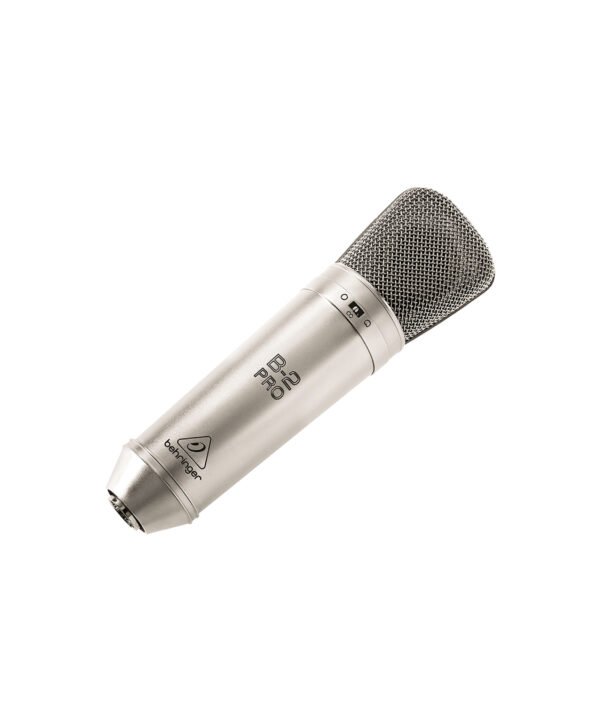
B-2 PRO BEHRINGER
$790.000